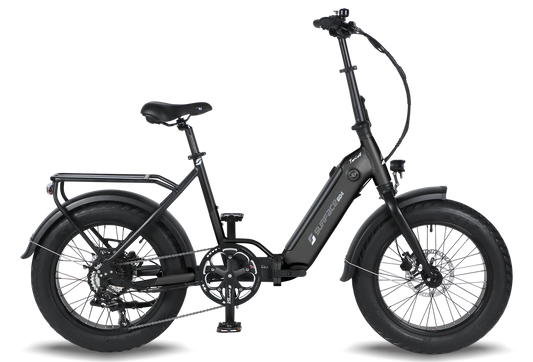
Collection: Folding
Folding bikes and electric bikes (e-bikes) serve different purposes, but both offer unique advantages in terms of convenience, transportation, and sustainability.
Folding Bikes:
The purpose of folding bikes is primarily centered around portability and versatility. These bikes are designed to be compact and easily foldable, allowing users to:
-
Multimodal Transportation: Folding bikes are perfect for combining different modes of transportation, like taking a train or bus and then cycling the rest of the way. They can be folded and carried onto public transportation or stored in the trunk of a car, making them ideal for urban commuting.
-
Space-Saving: Folding bikes are a great solution for people living in small apartments or houses with limited storage space. They can be neatly folded and stored indoors, minimizing the need for dedicated bike storage.
-
Commute Convenience: Folding bikes eliminate the worry of bike theft since they can be brought indoors, reducing the need for locking them up outside.
-
Travel: Many people use folding bikes while traveling, as they can be easily packed into a suitcase or taken on airplanes, allowing for exploration of new places by bike.
E-Bikes:
The purpose of electric bikes, or e-bikes, is to provide an assisted cycling experience through the integration of electric motors. They offer several benefits:
-
Easier Commuting: E-bikes make commuting less strenuous, especially over longer distances or hilly terrain. The electric motor provides assistance, reducing the effort required from the rider.
-
Faster Travel: E-bikes can help riders maintain higher average speeds, making them an efficient mode of transportation for medium-distance commutes.
-
Reduced Sweat and Effort: E-bikes are ideal for individuals who want to arrive at their destination without getting sweaty or exhausted. They can choose how much assistance the motor provides, tailoring the riding experience to their preferences.
-
Accessibility: E-bikes can enable individuals with varying fitness levels or mobility limitations to enjoy cycling and explore their surroundings.
-
Environmental Benefits: While e-bikes still require energy to charge their batteries, they generally have a lower carbon footprint compared to traditional vehicles, contributing to sustainable transportation options.
-
Health and Fitness: While e-bikes provide assistance, riders still need to pedal, providing a level of exercise that can be adjusted based on personal fitness goals.
In summary, folding bikes are designed for portability and adaptability, while e-bikes are aimed at making cycling more accessible, efficient, and enjoyable by incorporating electric assistance. Both types of bikes cater to specific needs and preferences, contributing to the diversification of transportation options in urban and suburban environments.